
Harry Spear came to the Florida Keys in the early 1970s, after chasing jazz guitar and finding it did not chase back. He worked as a mate. He saved money. And then he did the thing that would define the next forty years of his life: he started guiding.
Nearly four decades of it. More than 7,500 days on the water. Over 40 major tournament wins. And the whole time, his mind was working the problems in front of him. Most of them he could solve. The skiff was always the one he couldn't.
Every boat he builds is an argument he has already had with the water and lost, then had again and won.
1978
He built the first skiff in 1978. Not as a business, as a project. The boats available did not do what a guide actually needed, so he built one he hoped would. It didn't. Then he built a better one, and he has not stopped since. Forty-seven years of the same ongoing argument: lighter, quieter, shallower, drier, less horsepower, more efficient, more comfortable, more versatile, and simpler.
The company he kept
The technical poling skiff did not arrive fully formed. It was argued into existence in the 1980s and 90s by a small number of guides and builders in South Florida who were all solving the same problem at the same time. Harry was one of them, building one-offs while the category was still being invented. He has the photographs to prove it: Steve Huff and Rick Ruoff, and plenty of others, standing in his skiffs.
Harry will tell you the industry owes a debt to Hal Chittum. Without him there would have been no Hell's Bay, and no Chittum after it, and a lot of what the rest of the business now takes for granted would have taken years longer to arrive. Credit where it is due.
What he actually believes
That weight is the enemy of everything. That a boat that is quiet gets more shots. That fancy materials and huge price tags are often a way of not solving the problem. That a skiff should be strong, dry running, decently fast, and should ask for the minimum horsepower it can get away with. And that after a full day of poling, the difference between a good hull and a bad one shows up in the guide's back.
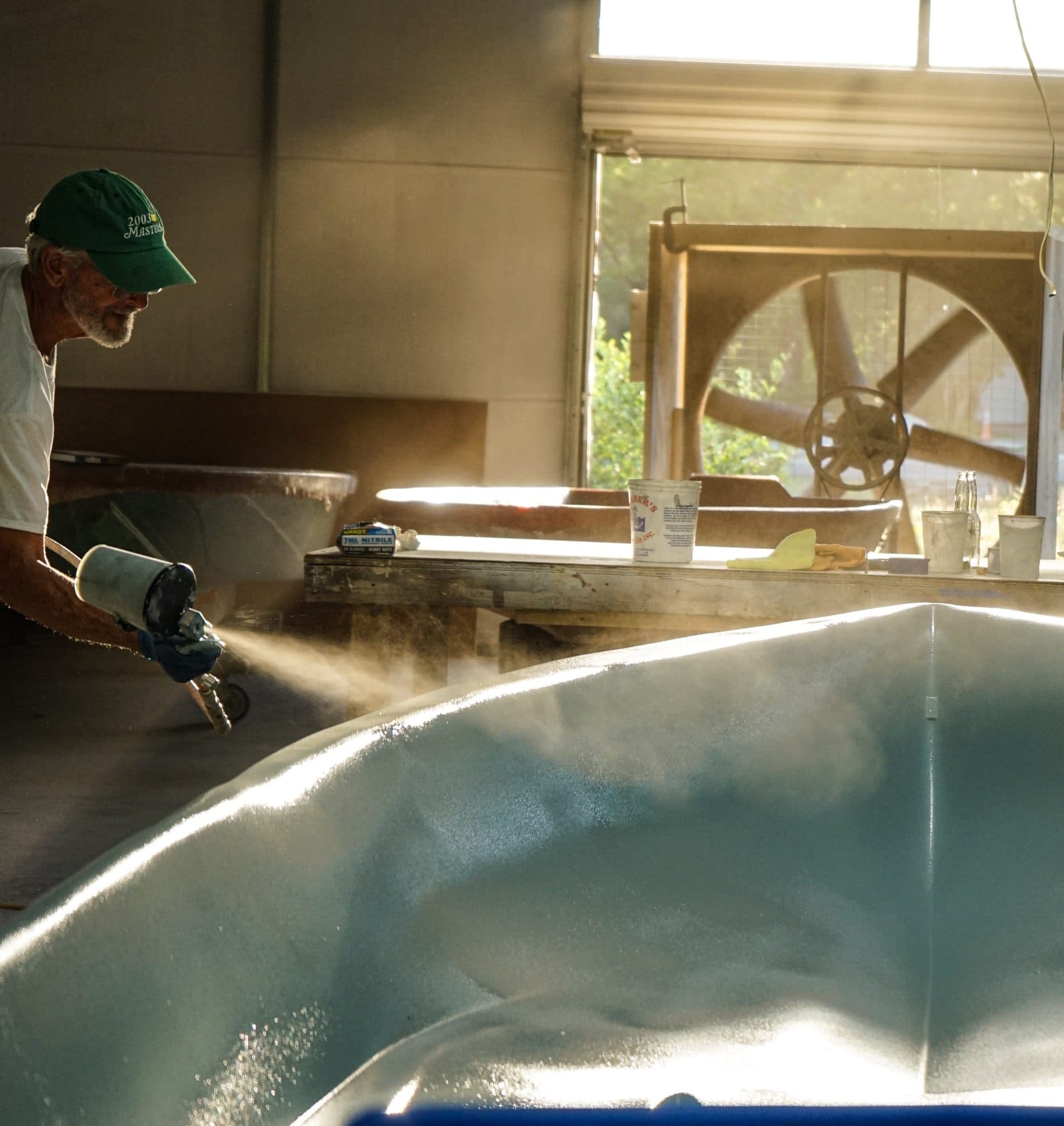
He builds them by hand, two on the floor at a time, in Sopchoppy on Florida's Forgotten Coast. There is no production line. There is him and a couple of buddies.
- 7,500+
- days guiding the Florida Keys
- 40+
- major tournament wins
- 1978
- year he built his first skiff
- 47
- years refining the same hull philosophy