
The building process
Eight steps, and you can see every one of them.
No vacuum bagging. No resin infusion. Every skin is laid up by hand in an open mold while somebody is standing over it looking at the work. That is not nostalgia, it is the argument: you cannot inspect what you cannot see, and a boat is only as good as the layer you did not check.
- 01
Spray gel coat
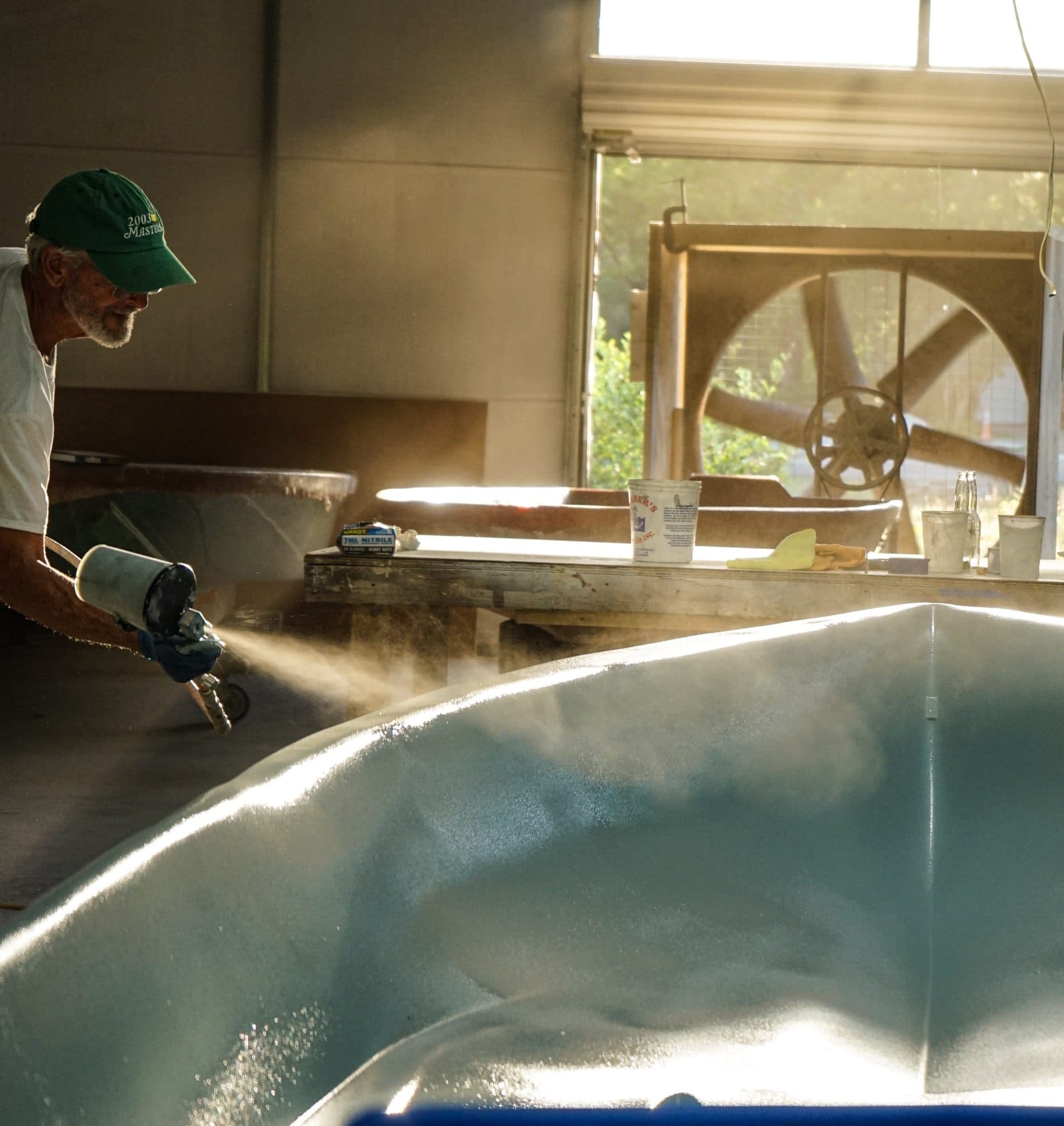
The mold goes first, not the boat. Gel coat is sprayed into the female mold, so the surface you eventually see on the outside of the hull is the surface that was against the tool. Get this wrong and every step after it inherits the mistake.
- 02
Initial hull lay up
The first skins go in by hand, wet out by hand, rolled out by hand. No vacuum bag, no resin infusion. Harry is looking at every square foot of it as it happens, which is the entire point: you cannot inspect what you cannot see.
- 03
Lay up of the outer skin
Successive layers build the laminate up to strength. This is where weight is won or lost. A production shop adds material for margin because nobody is watching each layer. Harry adds only what the boat needs, which is how a hull ends up two or three hundred pounds lighter than its competition.
- 04
Finished hull lay up
Core goes in where the boat needs stiffness, glass goes over it, and the laminate is closed out. Foam core is why the hull can be light and still be stiff as a board. Sixteen sheets of foam weigh about what a sheet and a half of three-quarter-inch plywood does.
- 05
Hull out of the mold
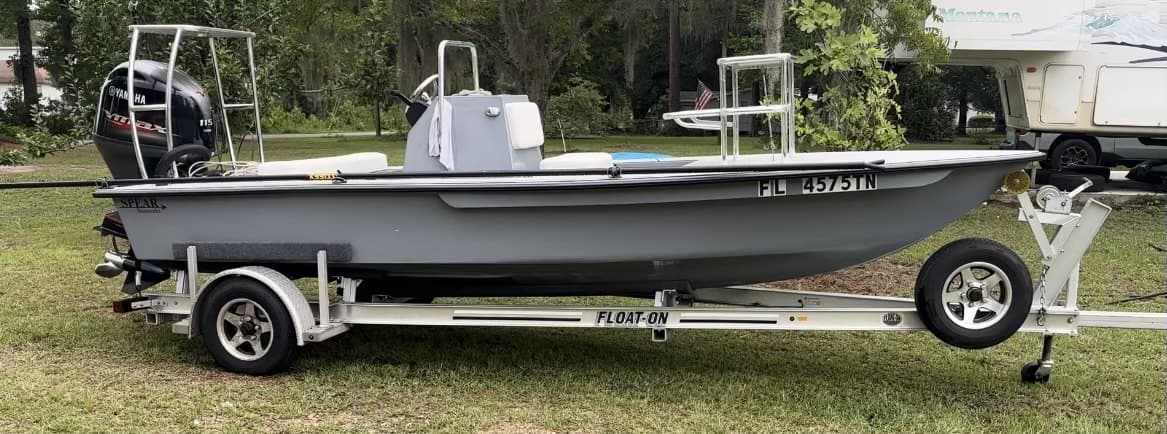
The first time the boat exists as a boat. What comes out is the shape Harry shaped by hand on a strong back before any of this started, transom first, then the keel and stem, then the bottom, faired until it was right.
- 06
I-beam stringer set in hull
The structural spine goes in. Stringers are what stop a light hull from flexing, and where they land determines how the boat carries weight and how it takes a chop.
- 07
Stringers plus bunk supports
Bunk supports tie the structure into the trailer bunks, so the boat is supported the same way sitting on a trailer as it is floating. A lot of hull damage in this category happens on the road, not on the water.
- 08
Deck glued in place
The cap goes on and the boat closes up. Everything underneath it is now permanent, which is why every layer beneath had to be right the first time. Somewhere under the bow, Harry puts a prayer in.
Want to watch one get built?
Owners get photos as the boat comes together, because most people want them. Start a conversation about your water and Harry will tell you honestly whether he is the right builder for it.